3,200 ha
Vineyard area
80%
Riesling planted
1,200 yrs
Wine history
37 km
Along the Rhine
Geography
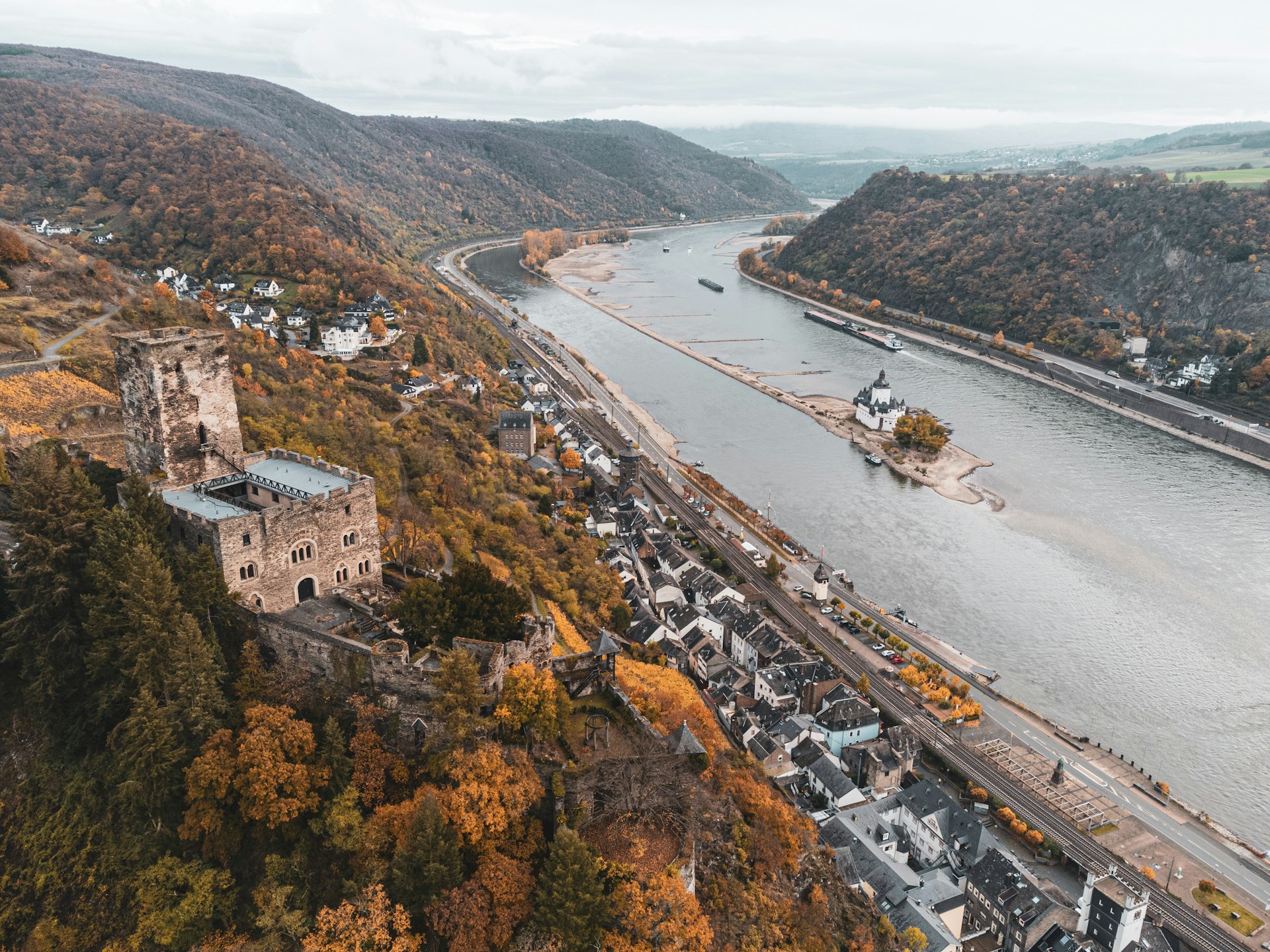
The Rheingau is a narrow wine region in the German state of Hesse, running west from Wiesbaden to Lorch along the Rhine. Uniquely, the Rhine flows east–west here, allowing the north-facing Taunus hills to present their southern slopes to the sun — perfect for Riesling.
Climate & Soil
The Rhine acts as a giant heat mirror, reflecting sunlight into the vineyards and moderating frost. The Taunus shields the slopes from cold northern winds. Soils range from weathered slate and quartzite (mineral, racy wines) to loess (rounder, fruitier wines). The magic is in this combination.
1,200 Years of Wine
Charlemagne is said to have noticed snow melting faster on the south-facing slopes above Ingelheim around 800 AD — the seed of Rheingau viticulture. The Cistercian monks of Kloster Eberbach, founded 1136, turned it into a science. Today's Rheingau stands on their shoulders.
Today
The Rheingau produces around 23 million bottles per year. Dry Riesling dominates, though the classic sweet Prädikats (Spätlese, Auslese, TBA) remain the region's most collectable wines. The VDP association organises quality among the top estates, with a Burgundy-style classification system.